Scientific
newsletters
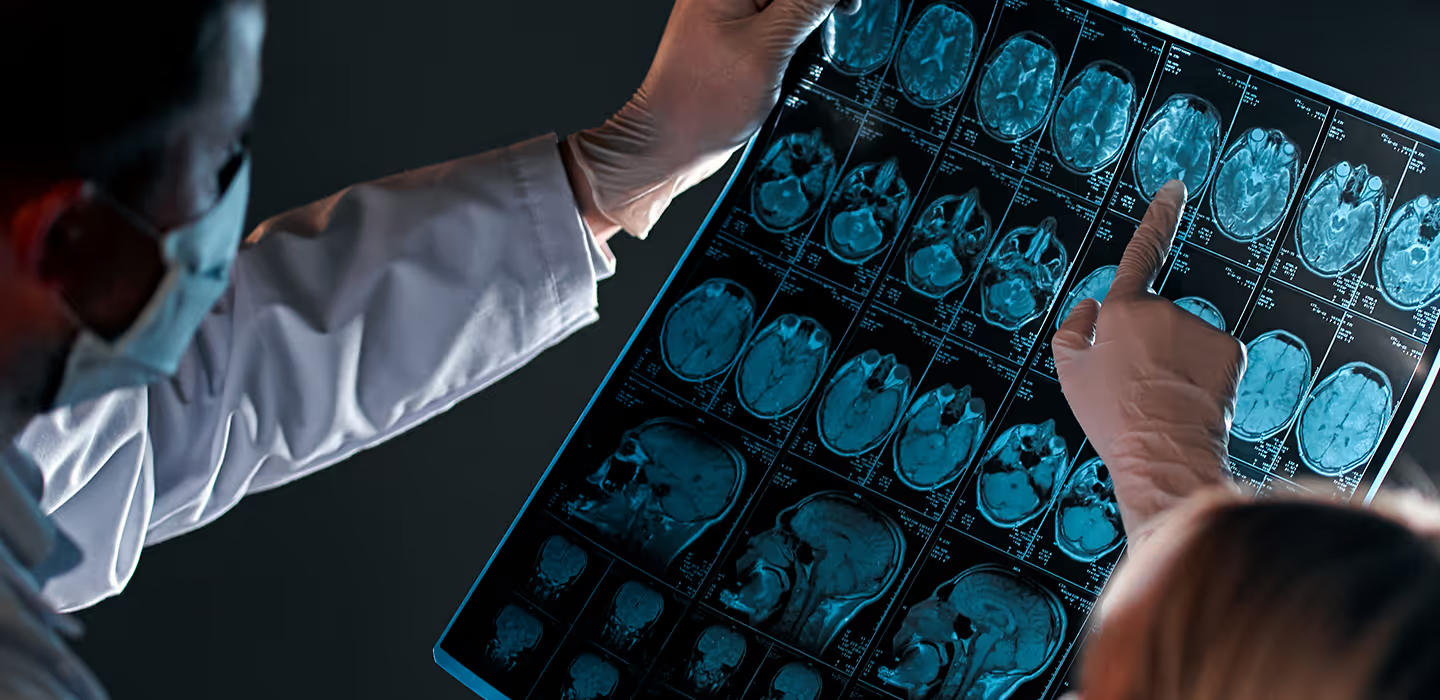
As scientific knowledge advances, our understanding of multiple sclerosis (MS) is changing profoundly. Today, care is no longer limited to medical treatments: it fully embraces everything that helps people live better with the condition in their daily lives.
For many years, physical activity was often restricted in people with MS out of caution. Today, scientific evidence has transformed that view. We now know that movement is not only safe, but genuinely beneficial.
Physical activity helps improve strength, endurance and mobility. It can also reduce the impact of fatigue, lift mood and support a better quality of life. Even small, regular efforts can make a difference. In the context of MS, however, these “small efforts” can require an enormous amount of energy. Recognising this already brings us closer to understanding the lived reality --and the remarkable resilience of those who face it every day.
In the same rationale, rehabilitation is taking on an increasingly important role from the very beginning of the disease. Because MS symptoms are heterogeneous and can change over time, it is essential to adopt a holistic approach tailored to each individual. Rehabilitation is not only about “recovering”; it is also about “learning to adapt” -- managing energy more effectively, organising daily life, or finding practical solutions to remain physically active. It enables each person to keep moving forward, at their own pace.
These two articles, written by Professors Daphne Kos and Peter Feys, clearly show an important evolution: MS care is no longer limited to treating the disease. It also aims to strengthen the person’s own capacities. Recent research shows that the brain can continue to adapt despite the disease, and highlights the value of new approaches, including digital tools, to support people in their daily lives.
As always, these advances are the result of rigorous scientific research work, made possible thanks to the loyal support of our donors. By supporting research, you are directly helping to improve the lives of people living with multiple sclerosis.
We hope you find this enjoyable to read and wish to thank you warmly for your trust.
Professor Doctor Bénédicte Dubois
President of the Belgian Charcot Foundation - Fighting multiple sclerosis.

Newsletter 59
Stay informed
Receive all the information related to research and news from the Belgian Charcot Foundation directly in your inbox.